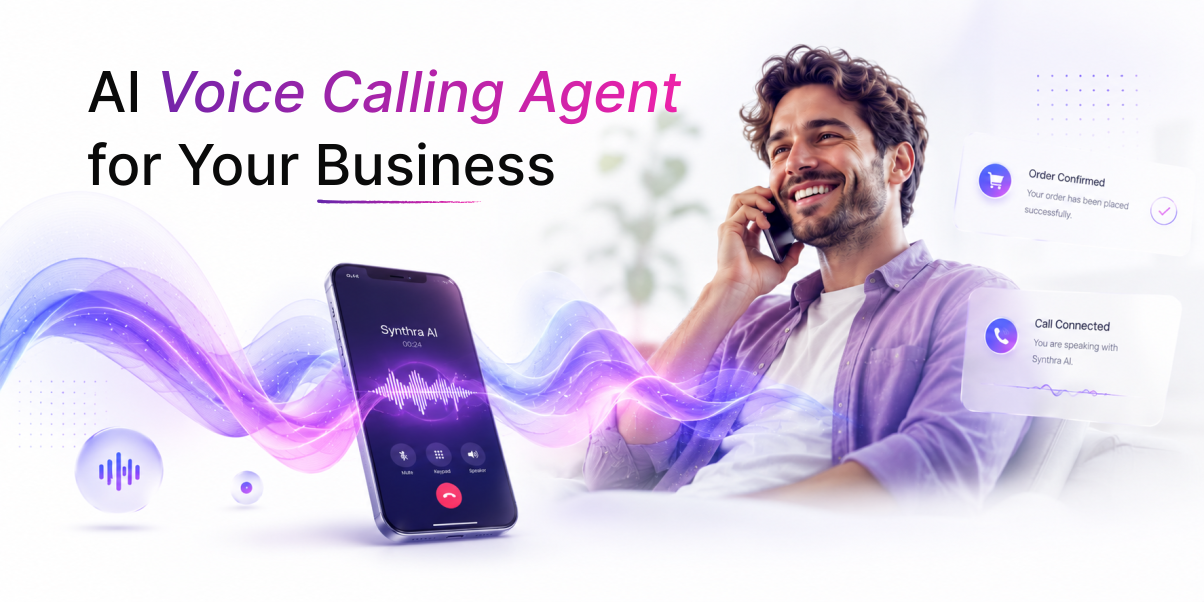
CallSynthra: A Custom Voice AI Agent Ready to Talk to Your Customers
Most "voice AI" products on the market are wrappers. You plug in a phone number, pick a voice, write a script, and pray the agent doesn't fall apart the moment a customer says something off-script.
I wanted to build something different. So I built CallSynthra from scratch.
CallSynthra is a fully custom voice agent platform. No black boxes. Every layer of the stack, from the telephony bridge to the reasoning engine to the retrieval pipeline, is something I own and can tune for the business that's using it. It's currently configured for restaurants and clinics, but the architecture is industry-agnostic. If your business runs on phone calls, CallSynthra can run them for you.
This post is a quick tour of what it does, how it's built, and where it can go.
What CallSynthra actually does
It picks up the phone. It listens. It understands. It checks your calendar, your menu, your CRM, your patient records. It books, reschedules, answers questions, takes orders, transfers calls when it needs to. It remembers context across the conversation, and depending on how you configure it, across calls too.
The caller doesn't feel like they're talking to a phone tree. They feel like they're talking to a competent receptionist who happens to never sleep, never get annoyed, and never put them on hold.
Where it works today
Right now CallSynthra is deployed for two industries:
- Restaurants: Reservations, modifications, cancellations, menu questions, hours, special requests.
- Clinics: Appointment scheduling, rescheduling, insurance pre-checks, basic intake, post-visit follow-ups, prescription refill requests.
Where it's heading next
The agent is built as a tool-calling system on LangGraph, which means adding a new vertical isn't a rebuild, it's a configuration job. A few industries we're actively scoping:
- Real estate, for lead qualification and showing scheduling
- Logistics and dispatch, for driver check-ins, ETA updates, and load confirmations
- E-commerce, for order status, returns, and customer service
- Salons and spas, for booking, rescheduling, and waitlist management
- Auto repair and home services, for quotes, scheduling, and reminders
- Hotels, for reservations, concierge questions, and post-stay follow-ups
- Insurance, for claims status and policy questions
- Education, for admissions inquiries and enrollment
If your business has a phone that rings, there's a version of CallSynthra that can answer it.
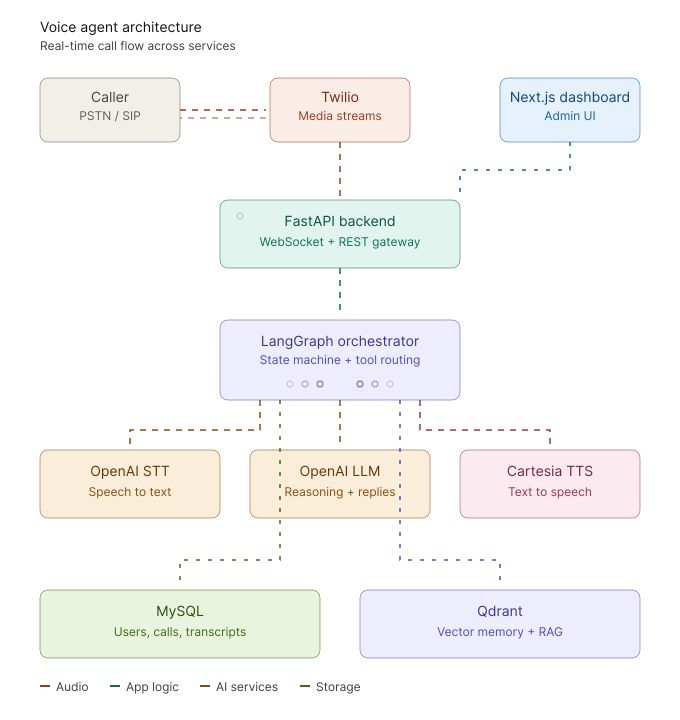
THE SYSTEM ARCHITECTURE
The AI stack
The model choices were deliberate. Every voice agent is a balancing act between three things: how smart it sounds, how fast it responds, and how much it costs to run a minute of call time. Here's what I picked and why.
Reasoning engine: GPT-4o mini
Fast enough to keep conversation latency under a second, smart enough to handle multi-turn logic and tool calls, cheap enough that running thousands of minutes of calls doesn't bankrupt the deployment.Speech to Text: OpenAI Whisper
Strong accuracy across accents and noisy environments, which matters when half your callers are dialing from a busy kitchen or a car.Text to Speech: Cartesia
This is the part that makes people do a double-take. Cartesia's voices are genuinely natural with sub-second time-to-first-audio, so the agent doesn't sound robotic and doesn't make the caller wait.The tech stack
- FastAPI + Python for the backend. Async-first, which is non-negotiable for handling concurrent calls.
- LangGraph for the agent orchestration. This is the part that makes the whole thing extensible. LangGraph lets me define the conversation as a graph of states and tools, so adding a new capability (like "look up an order in Shopify" or "create a Salesforce lead") is a matter of writing one tool, not rewriting the agent.
- MySQL for structured data: users, calls, transcripts, appointments, business config.
- Qdrant for vector memory. This is where the RAG layer lives.
- Twilio for telephony.
- Next.js for the admin dashboard.
The RAG layer is where most voice agents fall short
A voice agent is only as good as the knowledge it has access to. Most platforms give you a basic "upload your FAQ" button and call it RAG. That works for trivial questions and breaks the moment the caller asks something specific.
CallSynthra's retrieval pipeline does three things differently:
- 1.Hybrid search: Instead of just semantic vector search or just keyword search, the system runs both and combines the results. Semantic search catches paraphrased intent, keyword search catches exact terms.
- 2.Reranking: After retrieval, a reranker passes over the candidates and reorders them by actual relevance to the query. This single step is the difference between "the agent kind of answered my question" and "the agent answered my question."
- 3.Live knowledge sync: Business data changes. Menus update, doctors change their hours, services get added. The knowledge base is built to ingest updates without redeployment.
The result is an agent that can answer real questions about a real business, not just recite a script.
Why build instead of buy
There are good voice AI platforms out there. Vapi, Retell, Synthflow, ElevenLabs Agents. They all work. So why build CallSynthra?
- Pricing: Custom builds let the business own the cost structure, avoiding per-minute markups at scale.
- Data ownership: Conversations and customer info stay in infrastructure the business controls—critical for HIPAA or privacy.
- Real customization: Integrating with 15-year-old POS systems or following strict regulatory scripts is only possible when you own the stack.
- No vendor lock-in: Owning the stack means pricing or terms changes by platform providers won't end your business.
CallSynthra makes sense for businesses that already get enough phone volume to justify a dedicated solution (usually 15+ hours a week). It also makes sense where call quality is a competitive advantage.
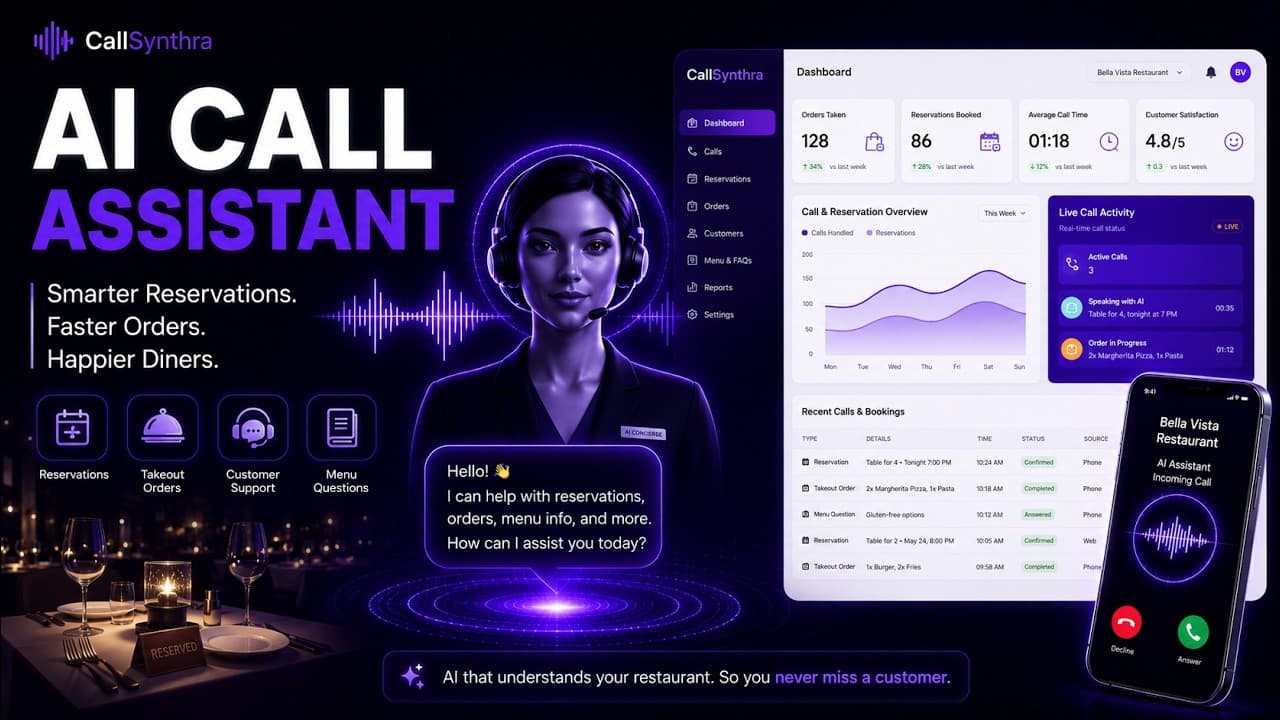
WATCH CALLSYNTHRA IN ACTION
Take a quick tour behind the scenes of how our AI voice agent handles real-world business calls with precision.
Let's talk
If you've read this far and you're thinking about voice AI for your business, I'd genuinely like to hear about the problem you're trying to solve. Reach out, and let's see what your phone could be doing for you.
RELATED BLOGS
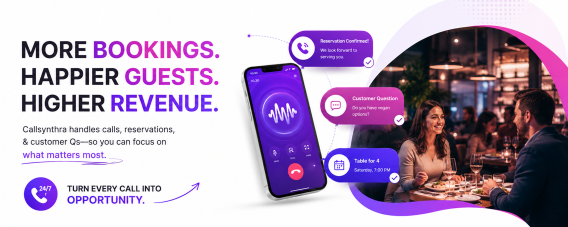
How CallSynthra Helps Restaurants Automate Reservations, Orders & Customer Calls 24/7
Learn how CallSynthra helps restaurants automate reservations, customer support, menu questions, and phone orders using a real-time AI voice agent powered by GPT, LangGraph, and Twilio.
How CallSynthra Helps Clinics Automate Appointment Scheduling & Patient Support
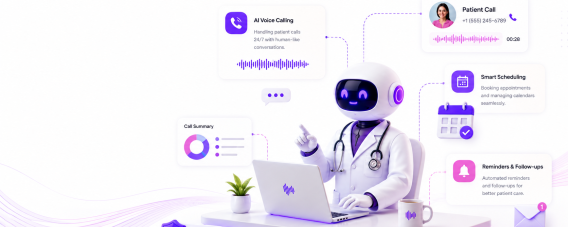
See how CallSynthra helps healthcare clinics automate appointment scheduling, patient calls, reminders, insurance pre-checks, and follow-ups using conversational AI voice agents.
