How CallSynthra Helps Clinics Automate Appointment Scheduling & Patient Support

Habib Qureshi
AI Systems Engineer
8 min read
May 15, 2026
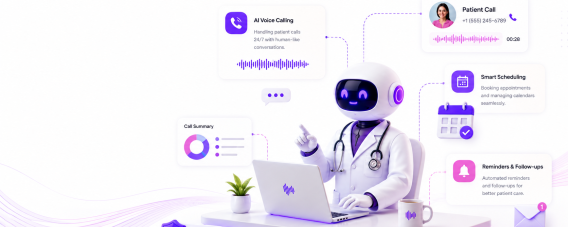
Medical clinics face constant pressure balancing patient care with administrative workload. Reception desks are overloaded with repetitive phone calls that consume staff time and delay patient support. CallSynthra automates those conversations using conversational voice AI designed specifically for healthcare workflows.
THE FRONT-DESK BOTTLENECK
Most clinic calls are operational rather than medical. Patients call to confirm appointments, reschedule visits, ask about office hours, verify insurance, request prescription refills, or follow up after visits. These repetitive workflows create massive administrative overhead.
- Long patient hold times
- Overloaded reception staff
- Missed appointment requests
- Scheduling inefficiencies
- Poor after-hours support
HOW CALLSYNTHRA HELPS CLINICS
CallSynthra functions as an AI-powered virtual receptionist for clinics. It answers calls naturally, understands patient intent, accesses scheduling systems, and automates repetitive workflows without sounding robotic.
- Appointment Scheduling: Book, modify, and cancel appointments automatically.
- Patient Reminders: Reduce no-shows with automated reminder calls.
- Insurance Pre-checks: Collect insurance information before appointments.
- Prescription Requests: Handle refill workflows efficiently.
- After-Hours Support: Provide 24/7 patient assistance.
INTEGRATION WITH CLINIC SYSTEMS
CallSynthra integrates with calendars, CRMs, patient management systems, and internal clinic workflows. This allows the AI to access real-time patient scheduling and operational data securely.
DATA PRIVACY & COMPLIANCE
Healthcare requires strict control over patient data. Because CallSynthra is custom infrastructure rather than a generic SaaS wrapper, clinics maintain control over data flow, storage, integrations, and compliance requirements including HIPAA-sensitive workflows.
THE AI STACK
- GPT-4o mini for reasoning and conversation flow
- Whisper for medical speech recognition
- Cartesia for natural human-like voice synthesis
- LangGraph for workflow orchestration
- Twilio for telephony
- Qdrant for retrieval-based knowledge systems
WHY CLINICS ARE MOVING TO VOICE AI
Healthcare providers are increasingly adopting AI automation because staffing shortages and patient expectations continue to rise. Patients expect immediate responses, while clinics need operational efficiency without sacrificing care quality.
- Reduce front-desk workload
- Improve patient experience
- Lower operational costs
- Increase appointment conversion
- Reduce missed calls
- Improve after-hours communication
The goal of healthcare AI isn't replacing people. It's reducing administrative friction so clinic staff can focus on patient care. Let's build your clinic AI assistant.
— Habib Qureshi


